Danish-Danites
Characteristics of the Biblical Tribe of Dan Compared to those of the Danes of Denmark.
To view video with sub-titled captions (recommended) press WATCH ON YOUTUBEbutton.
Contents:
1. Introduction. Northern and Southern Dan.
2. Dan and Scandinavia.
3. Dan and the Tabernacle. A Dominating Influence.
4. Denmark and Dan.
5. Dan and Design, Craftsmanship.
6. Dan and Ships.
7. Dan and Strength.
8. Innovative yet Conforming.
9. Dan means Judgment, Accepting what there is but Critical.
10. Dan and the Danes.
^^^^^^^^^^^^^^^^
1. Introduction. Northern and Southern Dan.
The main purpose of the following article is to show how Characteristics of the Tribe of Dan are to be found among the Danes of Denmark. This confirms our identification of Denmark with Dan.
In ancient Israel there were two portions of the Tribe of Dan, one in the north (in Liash, and Leshem) and one in the south around Jaffa. These are paralleled by:
Northern Dan in Denmark
Southern Dan in Ireland.
We identity the Tribe of Dan with the people of Denmark and also with a sizeable minority in Ireland. Settlements of Danites were also to be found in Britain and elsewhere. Through Denmark and the Irish many citizens of the USA descend from Dan. So too, in the Land of Israel there was a northern section of Dan and a southern one. They were different from each other. These differences are still found today in their present day descendants.
Dan and the Rabbis. Rabbinical Sources Concerning the Tribe of Dan
https://hebrewnations.com/articles/tribes/dan/danrabbis.html
Rabbi Fishel Miel, "Sefer Shivtei Yisrael."
http://www.britam.org/mael/Mael12Dan.html
There are three main divisions amongst the Tribes of Israel:
1. The Children of Leah (Reuben, Simeon, Levi, Judah, Issachar, Zebulon): These are characterized by the quality of "Chesed" i.e. of Compassion and Charity. They were mostly in the south.
2. The Children of Rachel (Joseph, Benjamin): These are characterized by the quality of "Gevurah" i.e. Heroism and Might. These were mostly in the middle.
3. The Children of the Handmaidens ( Dan, Naftali, Gad, Asher): These are characterized by the quality of "Tiferet" i.e. Truth, Glory, and Honor. These were mostly in the north.
All the Children of the Handmaidens became prominent in Scandinavia. Dan became Denmark, Norway Nafatali, Asher was importannt throughout the region including Sweden even though ultimately it settled mostly in Ireland. Gad left its mark mainly in Sweden and had an important influence in Finland which however imostly pertains to Issachar. These characteristics are found with them. Henrik Johan Ibsen (1828-1906) was a Norwegian playwright of much renown. A recurring theme with Ibsen is the Norwegain concern with revealing the Truth and complications that arise from that. Glory and Honor are related attributes that in everyday terms may be considered transductions of RESPECT. They have respet for each other and for themselves. This may be seen in their egalitarianism, social justice, and mutual assistance. When the Tribes were encamped around the Tabernalce in the Wildreness they were divied into 4 groups of three. The Tribes of Dan, Asher, and Naftali were together in the north with Dan at their head (Numbers 2:25-31). This pattern was repeated in Scandinavia.
Dan was the son of Bilhah the handmaiden of Rachel. When Dan was born Rachel said:
Genesis (ESV) 30:
6 Then Rachel said, 'God has judged me, and has also heard [ShMA] my voice and given me a son.' Therefore she called his name Dan.
Rabbi Fishel MAEL quoted from Rabeini BACHAI (Rabbi Bahya ben Asher ibn Halawa, 1255-1340, Spain) that this verse indicates Rachel combining the "southern" attributes of Reuben and Simeon with the northern ones.
Reuben and Simeon were the sons of Leah the sister (and rival) of Rachel. They were the first sons to be born.
When Reuben and Simeon was born their mother Leah (sister of Rachel) exulted:
Genesis (NIV) 29:
31 When the LORD saw that Leah was not loved, he enabled her to conceive, but Rachel remained childless.
32 Leah became pregnant and gave birth to a son. She named him Reuben [SEE-A-SON], for she said, ' It is because the LORD has seen my misery. Surely my husband will love me now.'
33 She conceived again, and when she gave birth to a son she said, 'Because the LORD heard [ShMA] that I am not loved, he gave me this one too.' So she named him Simeon [Hebrew: "Shimeon," connoting 'Hear My Oppression'].
Rabeini BACHAI sees in the repetition of the expression " heard [ShMA]" in the naming of Dan to that of "heard [ShMA]" in the naming of Simeon an indication that some of the southern qualities of the sons of Leah (Reuben and Simeon) would also be found in Dan who otherwise belonged to the north. This may seem far-fetched at first but it works. It fits in with other information that we have. Rabeini BACHAI is highly revered.
The Tribe of Dan had both northern and southern qualities therefore it inherited in both the north and south. The northern section of Dan had northern qualities. Its symbol was a snake which had both positive and negative connotations. The snake (in its positive mode) represents the attributes of vengeance and judgment. This was associated with northern Dan. The Vikings from Denmark and Norway often sailed with the carved image of a dragon on their prows. The dragon was associated with the snake. Samson, the hero of the Tribe of Dan, was likened un to a snake (Genesis 49:17; Talmud, Yerushalmi Sotah 9;b-10;a).
The southern section of Dan combined northern qualities with southern ones. The northern section of Dan is to be found in Denmark and the southern one among the Irish.
^^^^^^^^^^^^^^^^
2. Dan and Scandinavia.
In the land of Israel Dan had been divided into different sections. Originally Dan had received territory on the south west around Joppa neighboring Judah. Later Dan sent colonists to the north to Dan in the Galillee otherwise known as Leshem (Joshua ch.19) and to Liash (Judges ch. 18) in southeast Turkey otherwise known as "Smal" and its people as Dananu. A southern province of Sweden once ruled by Denmark is still known as Smal-land!
Moses had blessed the Tribe of Dan: "Dan is a lion's whelp, he shall leap from Bashan" (Deuteronomy 33:22). The area of Luash (Liash) was an extension of Bashan. "LIASH" means young male lion and therefore connects with the expression "Dan is a lion's whelp", i.e. Dan is a young lion, a "Liash", leaping forth from the Bashan: Luash-Liash is a geographical extension, a "leaping forward" from the area denoted as Bathan or Bashan. Near Luash was the entity of Yadi which was an enclave of Judaeans adjoining the Dananu of Smal and usually ruled by the same monarch. The Bible mentions Yair of Judah (Deuteronomy 3:14) in the Bashan. Bashan was also known as Basil which was later another name for Scandinavia.
The Blessing of Moses may therefore be understood to mean that ultimately a section of the Tribe of Dan would be found in Scandinavia!
^^^^^^^^^^^^^^^^
3. Dan and the Tabernacle. A Dominating Influence.
Dan was the head Tribe of the Three Tribes who were encamped to the north of the Tabernacle. These are Dan, Naphtali, and Asher. We identify Dan with the Danes of Denmark, Naphtali with Norway, and Asher with Ireland. Despite having less people than Sweden and about the same as Norway Denmark historically has been predominant over the others more often than not. In the past the As (plural Aseir) were also present in Scandinavia but they mainly moved to Ireland and Britain. Concerning the other peoples of Scandinavia we identify Sweden with the Tribe of Gad, and Finland with Issacher.
^^^^^^^^^^^^^^^^
4. Denmark and Dan.
The name Denmark means "Mark (border) of Dan." The Danes claim descend from someone called "Dan the Great."
An old Danish source "Chronicon Holsatiae vetus," quoted in "Accessiones historicae" by Gottfried Leibniz (1698), states the Danes were of the Tribe of Dan and the Jutes (who left Jutland en masse and moved to England) from Judah. The antiquarian Henry Spelman in 1620 also identified the Danes with the Israelite Tribe of Dan.
Scandinavian archaeology shows the presence of people from the Ancient Middle East from the Bonze Age. Over the centuries new incursions of peoples identified as Israelites who were also from the Tribe of Dan and related Tribes took place.
^^^^^^^^^^^^^^^^
5. Dan and Design, Craftsmanship.
Aholiab of the Tribe of Dan assisted Betzaleel of the Tribe of Judah in building the Tabernacle in the Wilderness (Exodus 31:2-6).
Exodus 31: 4 To devise cunning works, TO WORK IN GOLD, AND IN SILVER, AND IN BRASS, 5 And in cutting of stones, to set them, and in carving of timber, to work in all manner of WORKMANSHIP. 6 And I, behold, I have given with him AHOLIAB, the son of Ahisamach, OF THE TRIBE OF DAN.
Exodus 38: 23 ... AHOLIAB, son of Ahisamach, OF THE TRIBE OF DAN, AN ENGRAVER, AND A CUNNING WORKMAN.2-Chronicles 2:13 And now I have sent a skillful man, endowed with understanding, Huram my master craftsman 14 (the son of a woman of the daughters of Dan, and his father was a man of Tyre), skilled to work in gold and silver, bronze and iron, stone and wood, purple and blue, fine linen and crimson, and to make any engraving and to accomplish any plan which may be given to him, with your skillful men and with the skillful men of my lord David your father.
1-Kings 7: 13 Now King Solomon sent and brought Huram from Tyre. 14 He was the son of a widow from the tribe of Naphtali, and his father was a man of Tyre, a bronze worker; he was filled with wisdom and understanding and skill in working with all kinds of bronze work. So he came to King Solomon and did all his work.
Hiram the King of Tyre, the major Phoenician city, was a friend of King Solomon. He sent a master crafrsman of his, named Huram, to help in building the Temple. This apparently was the best man the King of Tyre had. One source said that Huram had am other from Dan. Another says he was of the Tribe of Naphtali. The Sages (Talmud, Arakin 16;b) said he had a mother from Dan and a father from the Tribe of Naphtali. His task was to cast bronze furnishings and ornate decorations for the Temple. Both in this case and in the case of Aholiab in the time of Betsalel and Moses the association of the Tribe of Dan is noticeable with craftsmanship is noticeable.
This Tribal Talent is found among the modern Danes:
Makers and designers generate significant value for Denmark as drivers of innovation, as business-owners and as bearers of tradition for a proud crafts and design nation.
https://www.globalsecurity.org/military/world/europe/dk-personality.htm
Danes are brought up to question authority, which makes them powerful innovators. This small country is constantly coming up with revolutionary approaches to design, environmental science, pharmaceuticals, biomedicine, food, agriculture, and many different types of technology.
^^^^^^^^^^^^^^^^
6. Dan and Ships
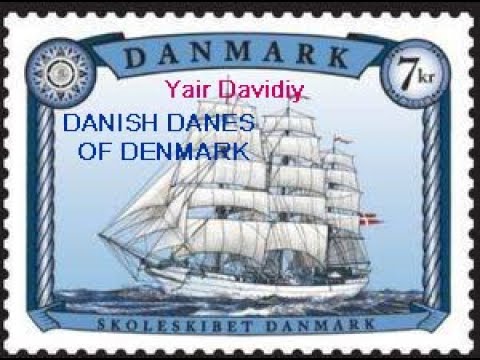
"Why did DAN remain in ships?" (Judges 6:7) asked the Prophetess Deborah.
https://www.usadk.org/news/denmark-is-the-worlds-fifth-largest-maritime-shipping-nation/
Denmark is the world's fifth largest maritime shipping nation!
Surrounded by sea, Denmark has more than 400 islands and a total coastline of over 7,000 kilometers. Therefore, maritime transport has been a vital source of income in Denmark and is continually growing hand-in-hand with increasing international trade. Danes have been active in the shipping business from the Viking era. Today almost 10% of global trade is transported by ships under Danish control. Approximately 115,000 people work in the Danish maritime sector and the industries supplying the shipping industry. The maritime of Danish maritime companies accounts for about 24% of the total Danish export.
^^^^^^^^^^^^^^^^
7. Dan and Strength
Samson the Judge of Ancient Israel (Judges chs. 13 -16) was blessed with superhuman strength. He came from the Tribe of Dan. The Danes have always had a reputation for being string.
The Danish historian, Saxo Grammaticus (c. 1150 - c. 1220 CE) , said that the Denes were the strongest people in Europe.
An article,
Eight Danish stereotypes: Are they true or false?
https://uniavisen.dk/en/eight-danish-stereotypes-are-they-true-or-false/
says that the idea that the DANES ARE STRONG LIKE THE VIKINGS is misleading.
# Danes bike during winter, run in the rain with no care in the world, swim in the sea when the water is well below 20 degrees. Is this the Viking attitude or what? Danes feel proud of having Vikings as their ancestors, besides, they're quite resistant to living in tough weather conditions (read: cold and rainy days most of the year)....
Verdict: They are of course neither stronger, nor weaker, than anyone else! So this stereotype is FALSE. #
Despite the negative verdict of the author concerning the Danish being relatively stronger the "stereotype" does exist. It always has.
A comparative study of hand-grip strength showed the English to be stronger than the Danes and the Danes than the Russians.
https://www.researchgate.net/figure/Grip-strength-in-Moscow-Denmark-and-England_tbl2_319436688
International studies do not seem to have indicated that the Danish are relatively stronger but the impression that they are more physically "fit" is still there. Other factors may be considered.
Daniel Maris in an Answer on Quora observed (among other things):
Originally Answered: Why do Danish people looks so attractive and physically fit?
Answer (Extract):
Genes
Lifestyle. They bike, they run, they eat good food (healthy, but not tasty). The country is small, everything looks like country side, so the air is very clean. Everywhere you go, besides a million bikes, you will see people running, even if it is snowing or raining, they don't care. They don't find excuses not to be fit, mothers run while pushing their baby carriers. They OFTEN organize events to encourage people to do sports. (marathons, bike races, even ROLLER SKATING DAY!) The government pays you a 'green tax', if you don't own a car, for being a 'green citizen.'
The Commentator Rabbi Abraham Iben Ezra (1089 - 1164) opined that Dan and Judah were the greatest warrior tribes. That is why when they marched forward Judah was in the front and Dan in the rear (Iben Ezra Numbers 1:19). Their task was to take the brunt of the battle and to protect the rest of Israel.
^^^^^^^^^^^^^^^^
8. Innovative yet Conforming
Genesis (NIV) 49:
16 Dan will provide justice for his people as one of the tribes of Israel.
The Hebrew original can more literally be rendered as saying:
# Dan will engage in judgement with his fellow as befits one of the Tribes of Israel. #
The Sages (Talmud, Pesachim) relates of an individual who was always challenging others to come to court to resolve differences. When they examined his ancestry they found he was a descendant of Dan.
A National Characteristic of the Danes is that they are always demanding explanations, and challenging decisions not only from their peers but also from parents and teachers, and from their superiors at work or in the army.
This leads to an innovative attitude alongside a strong tendency to conform. People who depart from the accepted norms of thought and behavior feel suspect and challenged.
4 Cultural traits about Danish people that explain their odd behaviour
Article written by By Anna Balk-Muller
https://www.nexum.eu/article/4-cultural-traits-about-danish-people-explain-their-odd-behaviour
The Danes are schooled from an early age to ask questions, challenge ideas and debate positions.
Denmark - Personality of the Danes
https://www.globalsecurity.org/military/world/europe/dk-personality.htm
# Over the years, there have also been traces of local insularity, snobbery and conformity. It was best not to be different. 'The Ugly Duckling' of the fairytale writer Hans Christian Andersen (1805-1875) is given a hard time because it is odd.
The Danish-Norwegian author Aksel Sandemose (1899-1965) invented the concept 'Janteloven' ('The Jante Law') with the bigoted rules he felt dominated his birthplace, a provincial town in Jutland. The (fictitious) rules include: 'Do not imagine you are anything special' and 'Do not imagine you can teach us anything'.
The effort to reach consensus and compromise in everyday life is ingrained in Danish culture and can be found at the highest level in the parliamentary system...
Nevertheless,
# Denmark, despite being a universal welfare state and having a widely homogenous population in terms of ethnicity and economic equality, is characterized by a very high degree of individualism.
5 Danish traits you should embrace to improve your life
https://allthingsnordic.eu/5-danish-traits-you-should-embrace-to-improve-your-life/
Straightforwardness. The Danes cut to the point. They hate too much talking for no reason. They get straight to the point and express themselves rigorously.
Openness & honesty. The Danes rarely hide their opinion. They like to express themselves openly and present things as they are, even if they seem to be against them.
Punctuality. Time is man's most precious resource. They don't like to waste it. Appointments are what they mean. You say at 19.00, you meet at 19.00, not later but not much earlier either. Oh! And things like meetings must last the minimum necessary time. Productivity matters.
And it is also about trust. People know what other people feel or believe. There is nothing to hide or worry about. All cards are face up on the table. This builds trust because you know that others are what they seem and you have no reasons to feel bothered or threatened. Trust makes the need for control vanish. And again you get resources freed (time and energy) to focus on your personal goals.
4 Cultural traits about Danish people that explain their odd behaviour
Article written by By Anna Balk-Muller
https://www.nexum.eu/article/4-cultural-traits-about-danish-people-explain-their-odd-behaviour
The Danes are schooled from an early age to ask questions, challenge ideas and debate positions.
Denmark - Personality of the Danes
https://www.globalsecurity.org/military/world/europe/dk-personality.htm
A British observer said: "The National characteristics of the Danish people are generosity, slowness of speech; a good humor which has become proverbial; determination almost amounting to truculence, especially in the case of the peasants; an immense capacity for hard work and sustained effort; extreme democratic principles; a strange fatalism which is a mixture of skepticism and hesitation; and finally a complete and wonderful fearlessness in throwing over traditions and prejudices." As to the great Danes, those in power and authority, "they are neither great optimists nor extravagant idealists. Their dreams are of a very practical nature and there is about them a certain atmosphere of clean and sane humanitarianism which is very attractive. They seem to carry out their reforms in a spirit of common sense which is almost scientific. Perhaps this is because their temperament is genuinely, rather than sentimentally, democratic. They are a balanced people, their democracy is broad and practical, and the type is probably nearer English than any other on the continent."
Eight Danish stereotypes: Are they true or false?
https://uniavisen.dk/en/eight-danish-stereotypes-are-they-true-or-false/
1. DANES ARE PATRIOTIC
2. DANES ARE CONCERNED ABOUT EATING HEALTHY
3. DANES ARE STRONG LIKE THE VIKINGS
4. DANES LIKE DRINKING ALCOHOL
5. DANES RARELY SMILE. DANES ARE RESERVED
7. DANES ALWAYS WEAR DARK CLOTHES
8. DANISH GIRLS ARE HARD TO APPROACH
^^^^^^^^^^^^^^^^
9. Dan means Judgment, Accepting what there is but Critical.
Together with the aspect of challenging everything we also found a high level of conformism. This might appear contradictory but it is not. The aspect of Din, root of the name Dan, is judgment. It means judging and testing and being critical of everything. It also connotes acceptance. That is the way things are. That is how they should stay until proven otherwise. Meanwhile you may challenge what is accepted while abiding by it.
National traditions of Denmark. Habits, mentality and the way of living
https://www.orangesmile.com/travelguide/denmark/traditions.htm
Danes are considered some of the most law-abiding people. Residents of the country regularly pay fairly high taxes, without requiring their reduction. They are very civilized and never try to absolve themselves of responsibility for what they have done. Criminals are rarely hiding from the investigation, and offenders pay their fines. Despite a special love for alcoholic beverages, Danish people are of a calm temper and do not arrange fights or brawls, preferring to resolve conflicts peacefully, without the use of physical strength. Danes may be called very curious people. They will necessarily ask the interlocutor a lot of different questions, being extremely reluctant to spread about their own lives. When meeting with the locals, you should welcome them with a firm handshake, showing sincere emotions.
The Danish Don't Have the Secret to Happiness
https://www.theatlantic.com/health/archive/2015/01/the-danish-dont-have-the-secret-to-happiness/384930/
Something is rotten in the state of Denmark.
By Michael Booth
Newspaper columnist Anne Sophia Hermansen, of the broadsheet Berlingske, caused a small kerfuffle recently when she expressed her feelings about what she saw as Denmark's suffocating monoculture: 'It is so boring in Denmark. We wear the same clothes, shop in the same places, see the same TV, and struggle to know who to vote for because the parties are so alike. We are so alike it makes me weep.'
10. Dan and Irony
Bert Otten in an article identifying the Irish with Dan adduces the example of Samson who came from Dan and was accustomed to employ riddles, ironic remarks, and play the equivalent of practical jokes.
https://hebrewnations.com/articles/tribes/dan/bottendan.html
This could be considered an aspect of Dan-Din Judgment. Irony and Sarcasm involve showing how good or bad intentions had the opposite effect of that intended. This is passing judgment on them. The Danes of Denmark also have this characteristic but they use it in a somewhat different way.
Denmark - Personality of the Danes
https://www.globalsecurity.org/military/world/europe/dk-personality.htm
.... Denmark, where two elements, irony and sarcasm, dominate.
# In the Danish perspective, irony is a form of expression where you, in order to amuse, state the opposite of what you are actually thinking in a way that makes your true opinion obvious. ... Ambiguity, self-contradictions and indirect jokes about either Danes or others are typical elements constituting the kind of irony Danes apply. For example, if a Dane botches a task completely, his or her employer could answer, 'Well done'. However, it is not here understood as bitter criticism, but as a resigned, joking commentary.
# Another aspect of Danish irony is the extensive use of self-irony, where Danes by directing the irony at themselves show to the public or their social or professional peers that they do not take themselves too seriously. Sarcasm, also widely used in Denmark, is defined as a variation on irony, where mocking or spiteful remarks are phrased in more or less humorous ways. A classic Danish example of sarcasm is when someone is attempting something without much success, and another person then says, 'That went well'. This example is illustrative because it, on the one hand, signals to the recipient the opinion of the sender, while the recipient at the same time is pacified, since it is virtually impossible to give an answer that keeps your dignity intact and refrains from showing self-effacing vulnerability and self-irony through signalling that you do not think too highly of yourself.
See Also:
Dan in Denmark. Identifying the Danish with the Tribe of Dan
This article discusses additional factors confirming the identification of Dan with Denmark and confirming points made above.
https://hebrewnations.com/articles/tribes/dan/denmark.html
^^^^^^^^^^^^^^^^
10. Dan and the Danes.
We adduced characteristics, according to Biblical and related sources, of the Tribe of Dan. We saw that the northern section of Dan had more attributes (Truth, Glory, and Honor. associated with the north.
We compared these findings with the commentaries of contemporary observers describing the People of Denmark. A correspondence exists!
Ancient traditions and historical findings indicate that the Danes descend from the Tribe of Dan. It was prophesied that Dan would be in Scandinavia. That is where Denmark is. In both cases both Dan and Denmark were relatively dominant entities.
The Tribe of Dan were known as a craftsman so are the Danes. In Hebrew "Dan" means "Judgment." Personality traits associated with Judgment include challenging conventional understandings while conforming socially; the use of sarcasm and irony; being straightforward; honest; sympathetic; egalitarian values; and so on. Dan was associated with ships, so are the Danes. They even bear the same name "Dan-mark" meaning Border of Dan. The Tribe of Dan had the habit of naming places they lived in or ven just passed through after Dan their father.
Joshua (NIV) 19:
47 When the territory of the Danites was lost to them, they went up and attacked Leshem, took it, put it to the sword and occupied it. They settled in Leshem and named it Dan after their ancestor.
Judges (NIV) 18:
12 On their way they set up camp near Kiriath Jearim in Judah. This is why the place west of Kiriath Jearim is called Mahaneh Dan [i.e. Camp of Dan] to this day.
Judges (NIV) 18:
28 There was no one to rescue them because they lived a long way from Sidon and had no relationship with anyone else. The city was in a valley near Beth Rehob. The Danites rebuilt the city and settled there.
29 They named it Dan after their ancestor Dan, who was born to Israel, though the city used to be called Laish.
Taking everything together we obtain a composite picture showing that he People of Denmark to a substantial degree are descended from the Israelite Tribe of Dan.
デンマーク人
聖書に記されたダン部族の特徴とデンマークのデンマーク人の特徴を比較したもの
字幕付き(推奨)で動画をご覧になるには、WATCH ON YOUTUBE ボタンを押してください。
内容:
1.はじめに。北部と南部のダン。
2.ダンとスカンジナビア。
3.ダンと幕屋。支配的な影響。
4.デンマークとダン。
5.ダンとデザイン、職人技。
6.ダンとシップス。
7.ダンとストレングス。
8.革新的でありながら、順応しています。
9.Danは「Judgment」を意味し、存在するものを受け入れるが、批判的です。
10.ダンとデンマーク人。
^^^^^^^^^^^^^^^^
1.はじめに。北部と南部のダン。
本稿の主な目的は、デンマークのデンマーク人の間でダン部族の特徴がどのように見られるかを示すことです。これは、デンマークとダンが同一であることを確認しました。
古代イスラエルには、ダン族の部族が二つあり、北(リアシュとレシェム)に一つ、ヤッファ周辺の南部にもう一つありました。これらは以下と平行しています:
デンマークのノーザン・ダン
アイルランドのサザン・ダン
私たちはダン部族をデンマークの人々と同一視し、またアイルランドのかなりの少数派と同一視しています。ダナイト人の集落は、イギリスや他の地域でも見つかっていました。デンマークとアイルランドを通じて、多くの米国市民がデンマーク系の子孫です。イスラエルの地にも、ダンの北部と南部がありました。彼らは互いに異なっていました。これらの違いは、現在の子孫において、今日でもなお見られます。
ダンとラビたち。ダン部族に関するラビ資料
https://hebrewnations.com/articles/tribes/dan/danrabbis.html
ラビ・フィシェル・ミエル、"Sefer Shivtei Yisrael"
http://www.britam.org/mael/Mael12Dan.html
イスラエルの部族には、主に三つの主要な区分があります。
1.レアの子どもたち(ルベン、シメオン、レビ、ユダ、イサカル、ゼブルン):これらは「Chesed」という、すなわち慈悲と慈愛という特性によって特徴付けられます。彼らは主に南部にいました。
2.レイチェルの子どもたち(ヨセフ、ベンジャミン):これらは「ゲヴラ」の性質によって特徴付けられます。英雄主義と力これらは主に真ん中にありました。
3.侍女の子どもたち(ダン、ナフタリ、ガド、アッシャー):これらは「ティフェレット」という特性によって特徴付けられます。真実、栄光、そして名誉。これらは主に北部にありました。
侍女の全ての子どもたちはスカンジナビアで著名になりました。ダンはデンマーク、ノルウェー、ナファタリ、アッシャーはスウェーデンを含む地域全体で重要でしたが、最終的には主にアイルランドに定住しました。ガドは主にスウェーデンで足跡を残し、フィンランドでは重要な影響力を持ちましたが、フィンランドは主にイッサカルに関係しています。これらの特性はそれらと共に見られます。ヘンリック・ヨハン・イプセン(1828〜1906)は、非常に有名なノルウェーの劇作家でした。イブセンに関する繰り返しのテーマは、ノーウェゲインの真実を明らかにすることへの関心と、そこから生じる複雑さです。栄光と名誉は、日常的な用語で尊敬の伝達とみなすことができる関連属性です。それらは互いに、そして自分自身に対して敬意を持っています。これは彼らの平等主義、社会正義、そして相互扶助に見られます。部族がウィルドレネスのターベルナルス周辺に野営した際、彼らは3つずつの4つのグループに分割されました。ダン族、アシェル族、ナフタリ族は、北部でダン族が長として共にいました(民数記2章25〜31節)。このパターンはスカンジナビアでも繰り返されました。
ダンは、ラケルの侍女であるビルハの息子でした。ダンが生まれたとき、レイチェルは言いました:
創世記(ESV)30:
6 それからラケルは言った、『神は私を裁き、また[ShMA]私の声を聞き、息子を与えてくださった。』それゆえ、彼女は彼の名前をダンと呼びました。
ラビ・フィシェルMAELは、ラベイニ・バハイ(ラビ・バヒヤ・ベン・アッシェル・イブン・ハラワ、1255‐1340、スペイン)から引用されており、この節はラケルがルベネとシメオンの「南」属性と北の属性を組み合わせていることを示しています。
ルーベンとシメオンは、ラケルの姉妹(かつライバル)であるレアの息子でした。彼らは生まれた最初の息子たちでした。
ルーベンとシメオンが生まれたとき、彼らの母レア(レイチェルの妹)は大興奮した:
創世記(NIV)第29章:
31 主はレアが愛されていないのを見たとき、彼女が妊娠できるようにされたが、ラケルは子どもがいないままだった。
32 レアは妊娠し、息子を出産しました。彼女は彼にルーベン(SEE-A-SON)と名付けました。なぜなら、彼女は『主が私の苦しみをご覧になったからです』と言ったからです。きっと夫は今、私を愛してくれるでしょう。
33 彼女は再び身ごもり、息子を産んだとき、こう言いました。「主は[ShMA]私が愛されていないと聞いたので、この子も私に与えてくださった。」それで彼女は彼にシメオンと名付けました(ヘブライ語: 「シメオン」、'私の抑圧を聞く]
ラベイニ・バチャイは、ダンの命名における「heard [ShMA]」という表現とシメオンの命名における「heard [ShMA]」の繰り返しから、レアの息子たち(ルーベンとシメオン)の南部的な特性の一部が、北部に属していたダンにも見られることを示すと見ています。最初は突飛に思えるかもしれませんが、うまくいきます。それは、私たちが持っている他の情報と合致しています。Rabeini BACHAIは非常に敬っています。
ダン族は北部と南部の両方の特性を持っていたため、北部と南部の両方で受け継がれました。ダンの北部は北部の特性を持っていました。そのシンボルは、肯定的および否定的な意味合いを持つ蛇でした。ヘビ(ポジティブモードにおいて)は、復讐と判断の属性を表しています。これは北部のダンに関連しています。デンマークとノルウェー出身のヴァイキングは、しばしば船長に彫られたドラゴンの像を乗船していました。ドラゴンはヘビと関連付けられていました。ダン族の英雄であるサムソンは、蛇に例えられました(創世記49章17節;タルムード、エルシュルミ・ソタ9章;b-10節、a)。
ダンの南部は、北部の特性と南部の特性を組み合わせました。デンマークの北部はデンマークにあり、南部はアイルランド人の中にあります。
^^^^^^^^^^^^^^^^
2.ダンとスカンジナビア。
イスラエルの地では、ダンは別々の区画に分かれていました。もともと、ダンはユダに隣接するヨッパ周辺の南西部で領土を受け取っていました。後にダンは、ガリラヤ(別名レシェム、Joshua ch.19)のダンへ、北へ、トルコ南東部のリアッシュ(Judges ch. 18)へ、すなわち「Smal」と呼ばれる地域へ、入植者を送り、その住民をダナヌとして送った。かつてデンマークが支配していたスウェーデン南部の州は、現在でもスマルランドと呼ばれています!
モーセはダンの部族を祝福しました:「ダンは獅子の子であり、バシャンから飛び上がるであろう」(申命記33章22節)。ルアシュ(リアシュ)の地域はバシャンの延長部でした。"LIASH" は若いオスのライオンを意味し、したがって「Dan is a lion's whelp」という表現と結びつきます。ダンは若いライオンで、「リアシュ」と呼ばれ、バシャンから跳躍しています。ルアシュ・リアシュは地理的延長であり、バタンまたはバシャンと呼ばれる地域から「跳躍する」ものです。ルアシュの近くには、ヤディの領土があり、それはユダヤ人の飛び地で、スマルのダナヌに隣接し、通常は同じ君主が統治していました。聖書はバシャンにおいてユダのヤイル(申命記3章14節)を言及しています。バシャンはバジルとしても知られており、後にスカンジナビアの別名となりました。
したがって、モーセの祝福は、最終的にダンの部族の一部がスカンジナビアに見つかることを意味すると理解できる。
^^^^^^^^^^^^^^^^
3.ダンと幕屋。支配的な影響。
ダンは、幕屋の北に宿営していた三部族の長部族でした。これらはダン、ナフタリ、そしてアッシャーです。私たちはダンをデンマークのデンマーク人と同一視し、ナフタリをノルウェーと同一視し、アッシャーをアイルランドと同一視しています。スウェーデンより人口が少なく、ノルウェーとほぼ同等であるにもかかわらず、デンマークは歴史的に他国に対して支配的であることがしばしばありました。過去に、As(複数形はAseir)もスカンジナビアに存在していましたが、主にアイルランドとイギリスへ移動しました。スカンジナビアの他の民族については、スウェーデンをガド族、フィンランドをイッサヘルと同一視します。
^^^^^^^^^^^^^^^^
4.デンマークとダン。
デンマークという名前は「デンマークのマーク(境界)」を意味します。デンマーク人の主張は「ダン・ザ・グレート」と呼ばれる人物に由来する。
古いデンマークの資料「Chronicon Holsatiae vetus」は、ゴットフリート・ライプニッツ(1698年)の「Accessiones historicae」に引用されており、デンマーク人はダン族とユダ出身のジュート族(ユトランドを大量に去りイングランドへ移住した)であると述べています。古物学者ヘンリー・スペルマンは1620年に、デンマーク人をイスラエル部族のダン族と同一視しました。
スカンジナビア考古学は、ボンゼ時代の古代中東の人々の存在を示しています。何世紀にもわたり、ダン部族や関連部族に属するイスラエル人と特定された人々の新たな侵入が起こった。
^^^^^^^^^^^^^^^^
5.ダンとデザイン、職人技。
ダン族のアホリアブは、ユダ族のベツラエルを助けて、荒野に幕屋を建てました(出エジプト記31章2〜6節)。
出エジプト記31章4節 巧妙な仕事を考案し、金や銀、真鍮で働き、5 石を切ってそれらをセットし、木材を彫ること、あらゆる職人技で働くこと。6 そして、見よ、私は彼と共に、ダン族のアヒサマクの子アホリヤブを与えました。
出エジプト記 38章23節 ...アホリアブは、ダン族のアヒサマフの子で、彫刻家であり、狡猾な職人です。2-Chronicles 2:13 今、私は熟練した人物、理解に満ちた者、私の熟練職人フラム(ダンの娘たちの女性の息子で、父はティルス出身の男)を遣わしました。その者は金銀、青銅と鉄、石と木、紫と青、上質なリネンと深紅の技術に熟練し、あらゆる彫刻を施し、与えられた計画を成し遂げる者たちと、私の父である私の父ダビデの熟練した熟練した者たちと共に。
列王記1章13節 今、ソロモン王はテュラムをテュラムから遣わし、連れ帰った。14 彼はナフタリ族の未亡人の息子で、父はティル出身の青銅職人で、あらゆる種類の青銅作業に長けた知恵と理解、そして熟練した技術に満ちていた。それで、彼はソロモン王のもとへ来て、すべての仕事をしました。
フィニキアの主要な都市であるティルスの王ヒラムは、ソロモン王の友人でした。彼は、彼のマスター・クラフスマンであるフラムを、寺院の建設を手伝うために派遣した。これは、どうやらティル王が持っていた最も優れた人物だったようです。ある情報筋は、フーラムがダンから別のものを持っていたと述べました。別の人は、彼がナフタリ族に属していたと言っています。賢者たち(タルムード、アラキン16章b)は、彼にダン出身の母とナフタリ族出身の父がいたと述べました。彼の任務は、寺院のために青銅製の家具と華麗な装飾を鋳造することでした。この場合と、ベタレルとモーセの時代のアホリアブの場合の両方において、ダン部族の結びつきは職人技において顕著です。
この部族の才能は現代のデンマーク人の中に見られます:
メーカーやデザイナーは、イノベーションの推進者、事業主として、そして誇り高い工芸・デザイン国家の伝統を担う者として、デンマークにとって大きな価値を創出します。
https://www.globalsecurity.org/military/world/europe/dk-personality.htm
デンマーク人は権威を問うように育てられたため、彼らは強力なイノベーターです。この小さな国は、デザイン、環境科学、医薬品、生物医学、食品、農業、そしてさまざまな技術において、常に革命的なアプローチを次々に生かしています。
^^^^^^^^^^^^^^^^
6.ダンとシップス
なぜDANは船に残ったのですか?(Judges 6:7)預言者デボラに尋ねました。
https://www.usadk.org/news/denmark-is-the-worlds-fifth-largest-maritime-shipping-nation/
デンマークは世界で5番目に大きい海上航運国です!
海に囲まれたデンマークは、400以上の島があり、総海岸線は7,000キロメートルを超えています。したがって、海上輸送はデンマークにおいて重要な収入源であり、国際貿易の増加と手を取り合って継続的に成長しています。デンマーク人はヴァイキング時代から海運業で活躍しています。現在、世界の貿易の約10%はデンマークの支配下にある船舶で輸送されています。デンマークの海運部門および船舶産業に供給する産業では、約115,000人が働いています。デンマークの海運会社の海事部門は、デンマーク全体の輸出の約24%を占めています。
^^^^^^^^^^^^^^^^
7.ダンとストレングス
サムソン(古代イスラエルの裁判官)(士師記13章~16節)は、超人的な力に恵まれていました。彼はダン族出身です。デンマーク人は常に「ストリング」という評判がありました。
デンマークの歴史家、サクソ・グラマティクス(約1150年頃)1220 CE) , デネスはヨーロッパで最も強い人々であると述べました。
記事、
デンマークの8つのステレオタイプ:それらは正しいのか、偽りなのか?
https://uniavisen.dk/en/eight-danish-stereotypes-are-they-true-or-false/
デンマーク人がヴァイキングのように強いという考えは誤解を招くと述べています。
# デンマークの自転車は冬に、雨の中で無用に走り、気温が20度以下のときは海で泳ぎます。これはヴァイキングの態度ですか?デンマーク人は、ヴァイキングを先祖として誇りに思っており、さらに、厳しい天候(すなわち、年間のほとんどが寒く雨の日)での生活にかなり抵抗しています。
結論:彼らはもちろん、他の誰よりも強くも弱くもありません!このステレオタイプは偽です。#
著者がデンマーク語が比較的強いという否定的な判決にもかかわらず、ステレオタイプは存在します。それは常にあります。
ハンドグリップの強さに関する比較研究では、イギリス人はデンマーク人より強く、デンマーク人はロシア人より強いことが示されました。
https://www.researchgate.net/figure/Grip-strength-in-Moscow-Denmark-and-England_tbl2_319436688
国際的な研究では、デンマーク人が比較的強いという示唆はされていないようですが、彼らがより身体的に「fit」であるという印象は依然として残っています。他の要因が考慮されることがあります。
ダニエル・マリスはQuoraでの回答において(他の事項も含む)観察しました:
元の回答: なぜデンマーク人はそんなに魅力的で、体格も健康に見えるのでしょうか?
回答(抜粋):
遺伝子
ライフスタイル。彼らは自転車に乗り、走り、健康的なが美味しくない美味しい食べ物を食べます。その国は小さく、すべてが田舎のように見えるので、空気はとても清潔です。どこへ行っても、何百万もの自転車を除けば、人々が走っているのを見るでしょう。雪が降っていても雨が降っていても、彼らは気にしません。彼らは健康でないことを言い訳にしません。母親はベビーカーを押しながら走ります。彼らはしばしば、人々がスポーツをするよう促すためにイベントを開催します。(マラソン、バイクレース、さらにはローラースケートデーまで!)政府は、あなたが車を所有していない場合、'green citizen'であることに対して'green tax'を支払います。
解説者ラビ・アブラハム・イベン・エズラ(1089年〜1164年)は、ダンとユダが最も偉大な戦士部族であると意見しました。それが、彼らが前進したとき、ユダが前方に、ダンが後方にいた理由です(Iben Ezra Numbers 1:19)。彼らの任務は、戦闘の大部分を受け止め、イスラエル全体を保護することでした。
^^^^^^^^^^^^^^^^
8.革新的でありながら、順応性に
創世記(NIV)49:
16 ダンはイスラエルの部族の一つとして、彼の民に正義をもたらすでしょう。
ヘブライ語の原典は、文字通りに次のように訳すことができます:
# ダンは、イスラエルの部族の一つに相応しいように、仲間と裁きを下すでしょう。#
賢者(タルムード、ペサチム)は、常に他者に対し、争いを解決するために裁判所へ出るよう挑戦し続けていた個人について語っています。彼の血統を調べたところ、彼がダンの子孫であることが判明しました。
デンマーク人の国民的特徴は、常に説明を求め、同僚だけでなく、親や教師、職場や軍隊の上司からも決定に異議を唱えていることです。
これは、革新的な態度と強い順応傾向をもたらします。受け入れられた思考や行動の規範から逸脱する人々は、疑わしいと感じ、挑戦を受けます。
デンマーク人の奇妙な行動を説明する4つの文化的特徴
アンナ・バルク=ムラー著
https://www.nexum.eu/article/4-cultural-traits-about-danish-people-explain-their-odd-behaviour
デンマーク人は幼少期から質問したり、考えに挑戦したり、立場を議論したりするように教育されています。
デンマーク - デンマーク人の人格
https://www.globalsecurity.org/military/world/europe/dk-personality.htm
# 長年にわたり、地域的な不従順さ、スノッブ、そして同調の痕跡も見られるようになっています。違うことはしないのが最善でした。童話作家ハンス・クリスチャン・アンデルセン(1805〜1875)の『醜いアヒルの子』は、奇妙であるため苦労しています。
デンマーク・ノルウェー系の作家アクセル・サンデモーゼ(1899〜1965)は、ユトランドの地方都市である出生地を支配していると感じた偏見的な規則を用いて、'Janteloven'(『ジャンテ法』)という概念を考案しました。(架空の)規則には、'あなたが特別な存在だと想像しないでください' と '私たちに何かを教えてくれると想像しないでください' が含まれています。
日常生活において合意と妥協を得ようとする努力はデンマーク文化に深く根付いており、議会制度の最高レベルで見られます。
それにもかかわらず、
# デンマークは、普遍的な福祉国家であり、民族性や経済的平等において広範な均質な人口を有しているにもかかわらず、個人主義の度が非常に高いことが特徴です。
生活を向上させるために取り入れるべき5つのデンマークの特徴
https://allthingsnordic.eu/5-danish-traits-you-should-embrace-to-improve-your-life/
率直さ。デンマーク人は要点を的確に切ります。彼らは理由もなく過度に話すことを嫌います。彼らは要点を率直に述べ、厳密に自己表現します。
開放性と正直さ。デンマーク人は意見を隠すことがほとんどありません。彼らは、たとえ自分たちが対立しているように見えても、率直に自己表現し、物事をそのまま提示することを好みます。
時間厳守時間は人間にとって最も貴重な資源です。彼らはそれを無駄にするのが好きではありません。予約とは、それが意味することです。19時とおっしゃいましたが、19時にお会いします。遅くはなく、かなり早くもありません。おお!そして、会議のようなものは、必要な最小限の時間でなければなりません。生産性は重要です。
そして、それは信頼についてもです。人々は他人が感じていることや信じていることを知っています。隠すことも心配することも何もありません。すべてのカードはテーブルの上で表向きに置かれています。これは、他者が見た目の通りであることを知っているため、信頼を築き、あなたが悩む理由や脅威を感じる理由がないからです。信頼は支配の必要性を消す。そして再び、時間とエネルギーという資源が解放され、個人的な目標に集中できるようになります。
デンマーク人の奇妙な行動を説明する4つの文化的特徴
アンナ・バルク=ムラー著
https://www.nexum.eu/article/4-cultural-traits-about-danish-people-explain-their-odd-behaviour
デンマーク人は幼少期から質問したり、考えに挑戦したり、立場を議論したりするように教育されています。
デンマーク - デンマーク人の人格
https://www.globalsecurity.org/military/world/europe/dk-personality.htm
イギリスの観察者は次のように述べました。「デンマーク国民の国民的特徴は、寛大さ、言葉の遅さ、諺のようになったユーモア、農民に匹敵するほどの執念、勤勉さと持続的な努力の膨大な能力、極端な民主主義の原則、懐疑と躊躇が混ざり合った奇妙な宿命論、そして最後に、伝統や偏見を断固として投げ捨てるという完全で素晴らしい大胆さである」と述べた。偉大なデンマーク人、権力と権威を持つ者たちについて言えば、彼らは偉大な楽観主義者でも華やかな理想主義者でもありません。彼らの夢は非常に実践的な性質を持ち、そこには清潔で正気な人道主義の雰囲気があり、とても魅力的です。彼らは、ほぼ科学的と言える常識的な精神で改革を実施しているようです。おそらく、彼らの気質が感情的というよりも、真に民主的であるためでしょう。彼らはバランスの取れた民族であり、民主主義は広範かつ実務的であり、そのタイプは大陸の他のどの民族よりも英語に近いと考えられます。
デンマークの8つのステレオタイプ:それらは正しいのか、偽りなのか?
https://uniavisen.dk/en/eight-danish-stereotypes-are-they-true-or-false/
1.デンマーク人は愛国的です。
2.デンマーク人は健康的な食事について懸念しています。
3.デンマーク人はヴァイキングのように強いです。
4.デンマーク人はアルコールを飲むのが好きです。
5.デンマーク人はめったに笑顔をしません。デンマーク人は予約されています
7.デンマーク人は常に暗い服を着ています。
8.デンマークの女の子は接しにくいです。
^^^^^^^^^^^^^^^^
9.Danは「Judgment」を意味し、存在するものを受け入れるが、批判的です。
すべてに挑戦する側面とともに、私たちは高いレベルの順応主義も見出しました。これは矛盾しているように見えるかもしれませんが、そうではありません。ディン(名前の由来であるダン)の側面は、判断です。それは、すべてに対して判断し、テストし、批判的であることを意味します。それはまた、受容を意味します。それが物事のあり方です。それが、証明されるまで彼らが留まるべき方法です。その間、受け入れられたものに挑戦し、それを遵守しながら、挑戦することができます。
デンマークの国民的伝統。習慣、考え方、そして生き方
https://www.orangesmile.com/travelguide/denmark/traditions.htm
デンマーク人は、最も法を守る人々の一つと考えられています。その国の住民は、減税を要求することなく、定期的にかなり高い税金を支払っています。彼らは非常に文明的で、行ったことに対して責任を免ろうとは決してしません。犯罪者は捜査から身を隠すことはほとんどなく、違反者は罰金を支払います。アルコール飲料への特別な愛情があるにもかかわらず、デンマーク人は穏やかな性格で、喧嘩や乱闘を手配せず、肉体的な力を使わずに平和的に紛争を解決することを好みます。デンマーク人は非常に好奇心旺盛な人々と呼ばれることがあります。彼らは必ず相手に多くの異なる質問をし、自分の生活について広めることに極めて消極的です。現地の方々と会う際は、率直な握手で迎え、誠実な感情を示すべきです。
デンマーク人は幸福の秘訣を持っていません
https://www.theatlantic.com/health/archive/2015/01/the-danish-dont-have-the-secret-to-happiness/384930/
デンマークの州では何かが腐っています。
マイケル・ブース著
新聞コラムニストのアン・ソフィア・ヘルマンセン(ブロードシート『Berlingske』)は、最近、デンマークの息を窒息させる単一文化と見なす感情を表明し、小さな騒動を引き起こしました。「デンマークはとても退屈です」私たちは同じ服を着て、同じ場所で買い物をし、同じテレビを見て、政党がとても似ているため、誰に投票すべきか悩んでいます。私たちはとても似ているので、泣きたくなります。
10.ダンとアイロニー
バート・オッテンは、アイルランド人をダンと識別する記事の中で、ダン出身のサムソンの例を挙げており、彼は謎かけや皮肉な発言、そして実用的なジョークに相当する遊びを好んだ。
https://hebrewnations.com/articles/tribes/dan/bottendan.html
これはダン・ディン判決の一側面とみなすことができます。皮肉と皮肉は、善意や悪意が意図した意図と逆の効果をもたらすことを示すことを含みます。これは彼らに対する判断です。デンマークのデンマーク人もこの特徴を持っていますが、やや異なる方法で使用しています。
デンマーク - デンマーク人の人格
https://www.globalsecurity.org/military/world/europe/dk-personality.htm
....デンマークでは、皮肉と皮肉という二つの要素が支配しています。
# デンマークの視点では、皮肉とは、実際に考えていることと正反対の意見を、明らかに示す形で、あなたを面白がるために表現する表現の一形態です。曖昧さや自己矛盾、そしてデンマーク人や他者に関する間接的な冗談は、デンマーク人が用いる皮肉の典型的な要素です。例えば、デンマーク人がタスクを完全に失敗した場合、雇用主は「よくやった」と答えることができます。しかし、ここではそれは苦い批判として理解されるのではなく、諦めた冗談めかしたコメントとして理解されています。
# デンマークの皮肉のもう一つの側面は、自己皮肉を広範に使用することで、デンマーク人は自分自身に皮肉を向け、一般の人々や社会的・職業的な仲間に対して、自分たちをあまり真剣に受け止めていないことを示すことです。皮肉は、デンマークでも広く用いられ、皮肉の変形として定義され、嘲笑的または意地悪な発言がややユーモラスな形で表現されます。典型的なデンマークの皮肉の例は、ある人があまり成功せずに何かに挑戦し、別の人が「うまくいきました」と言うときです。この例は、送信者の意見を受取人に示す一方で、受取人は同時に平和されている点を示すものであり、実質的に自分の尊厳を保ち、自己卑下的な脆弱性や自己皮肉を示すことを控える回答を、自己を過大評価していないことを示すことがほぼ不可能であるためです。
参照:
デンマークのダン。デンマーク人とダン部族を同一視する
本稿では、ダンとデンマークの同一性を確認する追加的要因と、上記の点を裏付ける要因について論じます。
https://hebrewnations.com/articles/tribes/dan/denmark.html
^^^^^^^^^^^^^^^^
10.ダンとデンマーク人。
私たちは、聖書および関連する資料に基づき、ダン部族の特徴を引用しました。私たちは、ダンの北部が北部に関連するより多くの属性(真実、栄光、名誉)を持っていることを確認しました。
我々は、デンマークの民を記述した現代の観測者の注釈とこれらの調査結果を比較しました。通信が存在します!
古代の伝承と歴史的発見は、デンマーク人がダン部族の子孫であることを示しています。ダンがスカンジナビアにいると予言されました。そこがデンマークの場所です。いずれの場合も、ダンとデンマークは比較的支配的な存在でした。
ダン族は職人として知られており、デンマーク人も同様に知られています。ヘブライ語で「Dan」は「審判」を意味します。判断に関連する性格特性には、社会的に順応しながら従来の理解に挑戦すること、皮肉や皮肉の使用、率直であること、正直であること、共感的であること、平等主義的価値観などが含まれます。ダンは船と関係があり、デンマーク人もそうでした。彼らは、ダンの境界を意味する「Dan-mark」という同じ名前さえ付しています。ダン族は、父親のダンにちなんで、彼らが住んでいた場所や通り過ぎた場所の名前を名付ける習慣がありました。
ヨシュア(NIV)19:
47 ダニ族の領土が彼らに失われたとき、彼らは上ってレシェムを攻撃し、奪い取り、剣で打ち砕き、占領しました。彼らはレシェムに定住し、先祖の名前にちなんでダンと名付けました。
裁判官(NIV)18:
12 彼らは途中で、ユダのキリヤト・ヤリム近くに陣営を設営した。これが、キリアト・ジェアリムの西側の場所がマハネ・ダンと呼ばれる理由です[すなわちダンのキャンプは今日まで
裁判官(NIV)18:
28 彼らはシドンから遠く離れた場所に住んでおり、他の誰とも関係がないため、救助できる者はいませんでした。その都市はベス・レホブ近くの谷にありました。ダニ族は都市を再建し、そこに定住しました。
29 彼らはそれを、イスラエルに生まれた祖先ダンにちなんでダンと名付けましたが、かつてその都市はラィッシュと呼ばれていました。
すべてを総合すれば、デンマークの人々がかなりの程度でイスラエル部族のダン族に系譜を継がれたことを示す合成画像が得られます。



0 件のコメント:
コメントを投稿